This article is proudly supported by our friends at which are the leading digital agencies specializing in web design. Thank you!
Usability and usefulness—rather than aesthetics—determine a website’s success. Since the only person who ultimately controls what happens on a webpage is the visitor clicking the mouse, user-centric design has become the standard for creating effective, profitable websites. After all, if users can’t use a feature, it doesn’t matter how attractive it is; it might as well not exist.
Rather than delving into specific implementation details (like search box placement), this article focuses on core principles, heuristics, and strategies that guide effective web design. When applied correctly, these can inform smarter design choices and make content easier to understand.
Related usability articles you might find helpful:
- Designing a Perfect Accordion
- Designing a Perfect Responsive Configurator
- Designing a Perfect Birthday Picker
- Designing a Perfect Date and Time Picker
- Designing a Perfect Mega-Dropdown
- Designing a Perfect Feature Comparison
- Designing a Perfect Slider
- 30 Usability Issues to Be Aware Of
Subscribe to our newsletter to stay updated on future insights.
Principles of Good Website Design and Effective Web Design Guidelines
To apply these principles effectively, it’s essential to understand how users interact with websites, what they think, and their typical behavioral patterns.
How Do Users Think?
User behavior on the web mirrors how customers behave in a store: they scan, glance, and click. Visitors typically scan pages for relevant information, focusing on specific points or “anchors” that guide their understanding—rather than reading every word.
Most users seek something interesting or useful and will click on the first promising link. If the resulting page doesn’t meet expectations, they hit the Back button and continue searching.
Users value quality and credibility. If a site offers high-quality content, they’re often willing to overlook poor design. Content outperforms aesthetics in importance. Users don’t read; they scan. They look for visual cues and anchors to navigate efficiently.
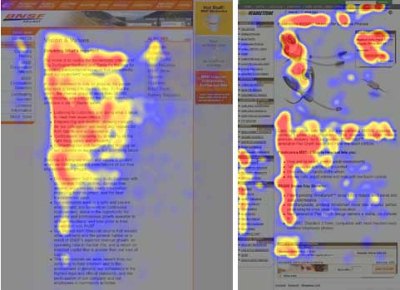
Note how “hot” areas abruptly appear in the middle of sentences—a typical scanning behavior.
Impatience and desire for instant results are hallmarks of web users. If a site fails to meet expectations, users abandon it, leading to lost opportunities. The more cognitively demanding and less intuitive a site is, the higher the likelihood visitors will leave in search of alternatives.
Users don’t always choose the quickest path. Instead, they satisfice: they pick the first reasonable option that seems to lead toward their goal, often clicking links immediately rather than performing a thorough, linear scan. Optimizing for this behavior is complex; satisficing is more practical and efficient.
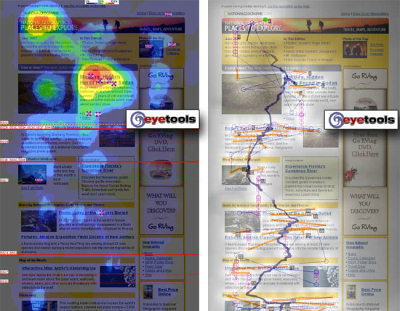
Users follow their intuition. Rather than reading every detail, they often muddle through, focusing on what “works” rather than fully understanding how everything functions. As Steve Krug notes, users don’t care about the inner workings—if it works, they’ll stick with it.
Control is crucial. Users want predictable behavior: no unexpected pop-ups or new windows, and the ability to navigate easily with familiar browser controls like the Back button.
1. Don’t Make Users Think
Krug’s first law of usability states that a webpage should be obvious and self-explanatory. Your goal is to eliminate questions—decisions that require users to pause and consider pros, cons, or options.
If navigation or site architecture isn’t intuitive, users become confused. Clear structure, visual cues, and recognizable links help guide users smoothly from their starting point to their goal.
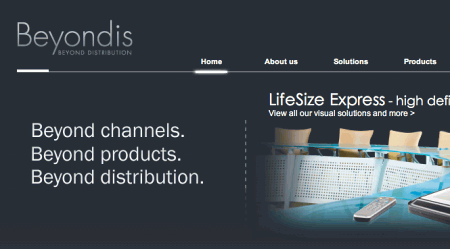
For example, Beyondis.co.uk claims to be “beyond channels, beyond products, beyond distribution.” But what does that mean? Since users tend to scan websites in an “F”-pattern, these key statements are among the first they see.
Although the design appears simple and intuitive, users must still search to understand the site’s purpose—an unnecessary question mark. To improve usability, reduce these ambiguities by making key messages clear upfront.
Consider ExpressionEngine’s approach: it employs a similar structure but avoids unnecessary confusion. Its slogan becomes functional, offering options to try the service or download a free version—reducing cognitive load and making the purpose immediately clear.
By simplifying messaging and structure, you help visitors grasp the core idea quickly, which increases engagement and trust.
2. Don’t Squander Users’ Patience
Keep interactions minimal. The fewer steps or actions required to test or explore a feature, the more likely visitors will actually try it out.
First-time visitors prefer exploring without lengthy forms or mandatory sign-ups. For example, allow users to test a feature without providing personal information upfront—building trust and reducing barriers.
Ryan Singer from 37Signals emphasizes that asking for an email after users see the feature in action significantly boosts willingness to share data.
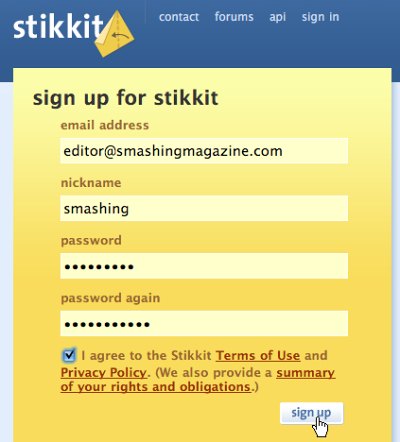
Stikkit exemplifies unobtrusive design: it requires almost nothing from visitors and makes testing easy. Similarly, Mite offers a quick registration process, fitting into less than 30 seconds with a streamlined, horizontal form—no scrolling needed.
Remove all unnecessary barriers—skip subscriptions or sign-ups initially. User registration can be a significant obstacle to engagement.
3. Manage to Focus Users’ Attention
Web content can be static or dynamic, but some elements naturally attract more attention. Visuals like images, bold text, and contrasting colors are more eye-catching than plain text.
The human eye recognizes edges, patterns, and motion instantly. This is why well-placed visual cues or subtle animations can effectively draw attention without overwhelming the user.
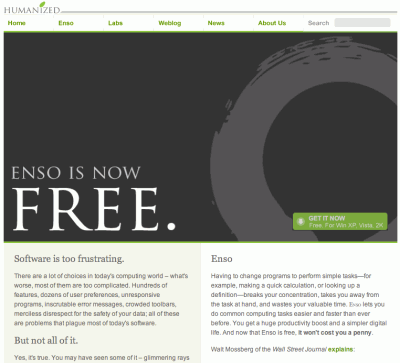
For example, a site that emphasizes the word “free” with a calm, attractive presentation leverages focus to guide users toward key information. Well-placed visual hints help users navigate seamlessly and reduce confusion.
Limiting visual clutter and directing focus ensures visitors can find what they need quickly, fostering trust and a positive experience.
4. Strive for Feature Exposure
Modern web designs often highlight steps or features through prominent buttons, visual effects, or guided flows. While sometimes viewed as “flashy,” these elements are highly effective at leading users through content.
For instance, Dibusoft combines visual appeal with clear navigation: nine primary options are immediately visible, guiding users effortlessly.
Clear visibility of available features is fundamental to user confidence. The goal is to make interactions intuitive—what’s available should be obvious, regardless of how it’s achieved.
5. Make Use of Effective Writing
Unlike print, web writing must adapt to users’ browsing habits. Long blocks of text without visual breaks or keywords in bold and italics tend to be ignored.
Be direct. Use concise, straightforward language. Avoid clever names, marketing jargon, or technical terms that may confuse users.
For example, Eleven2.com presents a simple, clear message: a straightforward price and minimal fluff—exactly what visitors want.
Best practices include:
– Short, to-the-point phrases
– Scannable layouts with headings, lists, and visuals
– Plain, objective language emphasizing benefits
6. Strive for Simplicity
The “keep it simple” (KIS) principle should be your primary goal. Users visit websites primarily for information, not for elaborate design.
A streamlined, straightforward layout with minimal content often provides the best user experience. Avoid clutter—focus on core content and essential features.
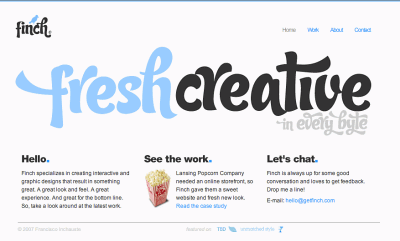
Finch exemplifies simplicity: it presents essential information clearly, giving users options without overwhelming them.
7. Don’t Be Afraid of White Space
White space is a powerful design element. It reduces cognitive load and helps users digest content more easily.
When visitors scan a page, they look for visual hierarchy—white space helps create this by separating sections and highlighting key areas.
Complex structures are harder to process. When choosing between lines or whitespace to divide content, whitespace is generally more effective.
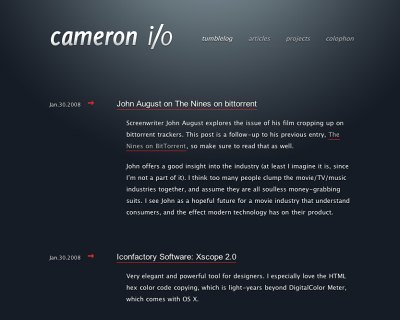
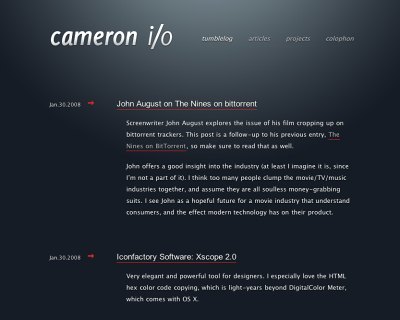
Cameron.io uses ample white space to create a clean, scannable layout that emphasizes content importance.
8. Communicate Effectively with a “Visible Language”
Aaron Marcus emphasizes three principles of “visible language”—the visual content on a screen:
- Organize: Provide a clear, consistent structure. Use familiar layouts and navigation cues.
- Economize: Do the most with minimal visual cues—simplicity, clarity, emphasis, and distinction are key.
- Communicate: Match presentation to user capabilities—use limited typefaces, clear typography, and balanced color.
Effective communication minimizes ambiguity and enhances usability, making content easy to interpret at a glance.
9. Conventions Are Our Friends
Adhering to common design conventions isn’t boring; it’s practical. Users expect familiar patterns—like the placement of search boxes, navigation menus, or icons.
Following conventions reduces the learning curve, builds trust, and boosts credibility. It also ensures your site aligns with users’ mental models, making interactions smoother.
For example, even if a page is in an unfamiliar language, well-established conventions enable users to complete tasks successfully.
Steve Krug advises adopting conventions unless you have a clear reason to innovate—only then should you break tradition.
10. Test Early, Test Often
The Test Early, Test Often (TETO) approach is crucial. Regular usability testing reveals issues before they become costly to fix.
Testing one user early in the project is vastly more valuable than late-stage testing. Errors identified early are less expensive and easier to address, aligned with Boehm’s law.
Remember:
– Most design flaws are identified during requirements and initial design phases.
– Testing is iterative: design, test, refine, repeat.
– No testing is a missed opportunity—each session provides valuable insights.
– Fresh perspectives matter; developers and designers deeply involved in a project often overlook usability issues.
In summary, if you aim for a great website, frequent testing is indispensable.