Launching a website that captivates visitors and achieves your business goals involves more than just aesthetics. Modern web design integrates visual appeal with functionality, usability, and strategic planning. Understanding the fundamental elements that contribute to an effective website can make the difference between a forgettable page and a powerful online presence. Whether you’re a seasoned developer or a small business owner venturing into digital space, mastering these key components will help you craft sites that are both attractive and impactful.
Web design is a dynamic discipline that blends creativity with user-centered strategies. It’s not only about making your site look good but also about ensuring it works seamlessly across devices, ranks well in search engines, and provides a memorable experience for visitors. This comprehensive guide explores the seven core elements that form the backbone of successful web design, offering insights into how each aspect contributes to an engaging and functional website.
First, Take Care Of The Tech Stuff (Or Have Your Host Do It For You)
Many assume that the essence of effective website design revolves solely around visual elements like color schemes and images. However, the technical foundation is equally vital. A well-optimized technical setup ensures your site loads quickly, remains accessible, and performs reliably across different browsers and devices.
Key technical considerations include:
Site loading time: In today’s fast-paced digital world, users expect websites to load in under two seconds. Delays beyond three seconds often lead to increased bounce rates. Speeding up your site can be achieved through optimized images, efficient coding, and reliable hosting solutions. For detailed strategies, consult our comprehensive load time guide. Fast sites not only improve user experience but also positively influence your search engine rankings.
Uptime: Your website’s availability is critical. Downtime can cost businesses thousands of dollars per minute, emphasizing the importance of choosing a dependable web hosting provider. For example, hosting services like DreamHost guarantee 100% uptime, ensuring your site remains accessible at all times. Reliable hosting with uptime guarantees minimizes disruptions and maintains your online presence.
Cross-browser compatibility: Your website should function flawlessly across all major browsers and operating systems. Conduct thorough testing before launch to identify and fix potential issues, ensuring a consistent experience for every visitor.
Accessibility: Designing accessible websites allows individuals with disabilities to navigate and interact with your content effectively. Adhering to standards such as the Web Content Accessibility Guidelines (WCAG) helps create inclusive digital experiences. Learn more about accessible design practices in our ultimate accessibility guide.
7 Key Components Of Web Design
Once the technical groundwork is laid, attention shifts to the creative and strategic elements that shape your site’s user experience. These core components influence how visitors perceive your brand, interact with your content, and ultimately convert into customers.
Below, we delve into seven fundamental elements, each playing a crucial role in your website’s overall effectiveness.
1. Overall Layout And Visual Appearance
Your website’s initial impression hinges on its layout and visual design. A clean, cohesive aesthetic not only attracts visitors but also encourages them to stay longer and explore your content.
Minimalistic Design: Embracing simplicity involves showcasing only the most essential elements on your pages. This approach uses negative space effectively, making your content more digestible and visually appealing. An increasingly popular trend is card-based design, which organizes information into small, manageable sections—perfect for quick consumption and easy navigation. For inspiration, review examples of clean card layouts that simplify user interaction.
Hero Images: Large, high-quality hero images at the top of your homepage can immediately communicate your brand message. To prevent sluggish load times, compress these images with modern tools, ensuring they remain sharp without sacrificing speed. Well-chosen hero visuals can create an emotional connection and set the tone for your site.
E-commerce Elements: For online stores, product images and calls-to-action (CTAs) are critical. Use crisp, detailed images to showcase your products and design standout buttons that guide users effortlessly through the purchase process. Clear CTAs are essential for conversions, so make sure they are prominently displayed and compelling.
Iconography: Icons serve as visual cues that enhance usability and branding. Decide between skeuomorphic icons, which mimic real-world objects with detailed effects, or flat icons, which offer a modern, minimalist look. The choice should align with your overall branding and user experience goals.
2. Color Scheme
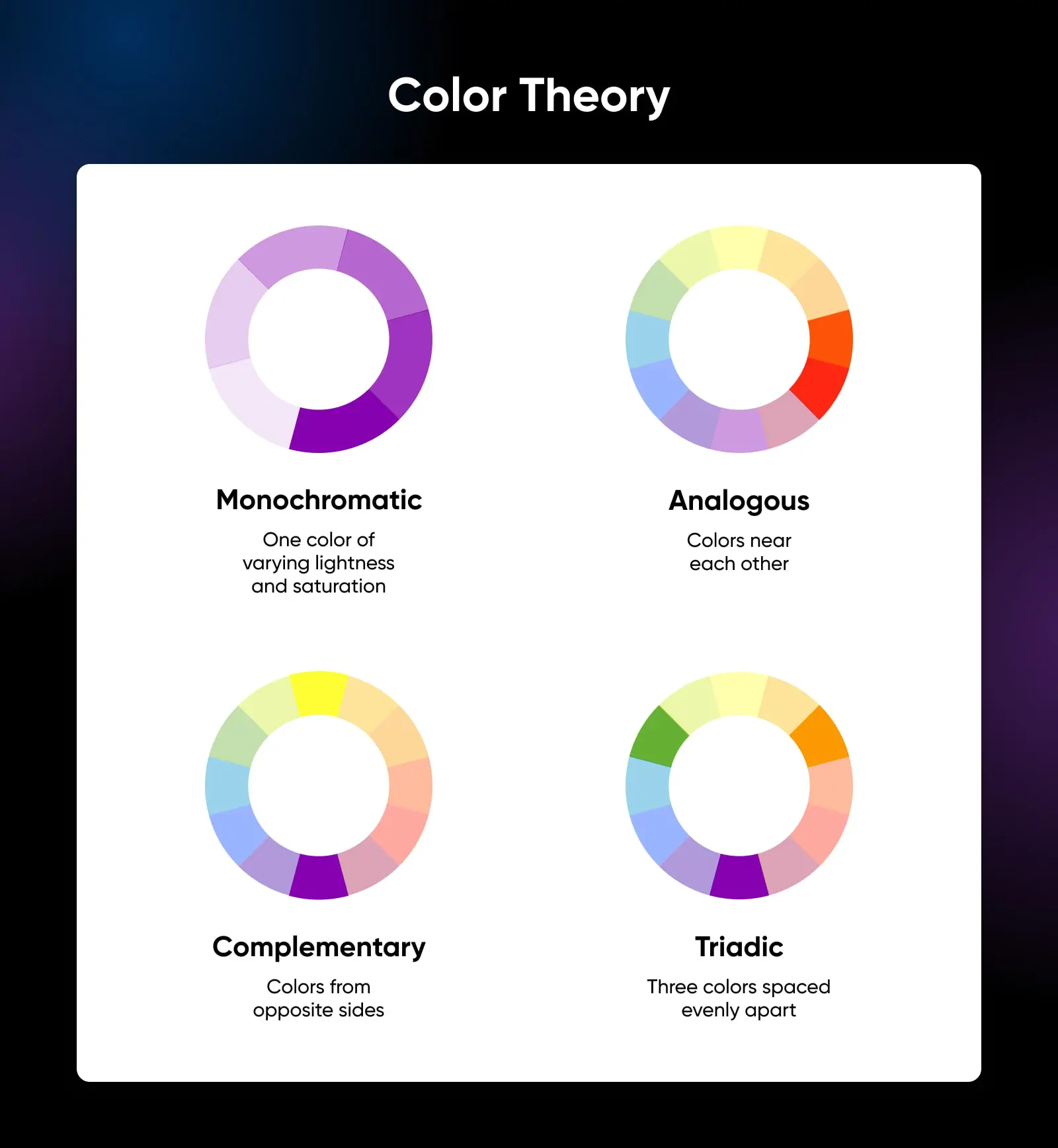
Selecting the right colors is more than a design choice—it’s a strategic decision that reflects your brand identity and influences user perception. Different hues evoke various emotions and associations; for instance, blue conveys trust, while red signals urgency.
Consider your target audience when choosing your palette. Bright, vibrant colors might appeal to younger demographics, whereas muted, sophisticated tones resonate with a more mature audience. Moreover, your industry can guide color selection: professional fields like law or finance often favor conservative palettes, while creative industries may opt for bold, expressive colors.
Once you establish your primary color, build a complementary palette to ensure visual harmony across buttons, links, and backgrounds. For deeper insights into color psychology and combinations, explore our ultimate guide to website color choices.
3. Typography
Typography influences readability, brand personality, and overall user experience. Choose fonts that align with your brand’s voice—serif fonts often convey tradition and credibility, while sans-serif fonts suggest modernity and simplicity.
Ensure your body text is legible, with a minimum size of 16 pixels. Use contrasting colors to enhance readability and select complementary fonts for headings and accents to create visual hierarchy. Avoid overly decorative or hard-to-read typefaces like Comic Sans, favoring clean, professional options.
Experiment with font pairings to add personality, but maintain consistency across your site. For example, pairing a distinctive heading font with a neutral body font balances style and clarity. For inspiration, check out font pairing examples.
4. Navigation
Effective navigation is essential for guiding visitors through your website efficiently. Keep the menu simple and intuitive—avoid overly complex or animated hover effects that can distract users.
Position your primary menu prominently at the top of each page. Decide between a traditional horizontal menu or a hamburger icon for mobile devices; while the latter conserves space, it may reduce discoverability. For long, scrolling pages, incorporate directional cues like arrows or sticky “Back to Top” buttons to enhance usability.
Don’t neglect the footer navigation; it can offer additional links, contact info, and CTAs, increasing engagement and conversions. A well-structured navigation system ensures visitors find what they need without frustration. See examples of optimized navigation in our material design resources.
5. Content
Content is the core of your website—it’s what ultimately communicates your message and persuades visitors. Design your content to be clear, concise, and well-organized with headings, lists, and visual cues that facilitate skimming.
Ensure your messaging conveys trustworthiness and expertise. Consistent branding, tone, and formatting across pages reinforce your identity and make the experience cohesive. Remove unnecessary information to keep pages focused and engaging, and use calls-to-action strategically to guide visitors toward desired outcomes.
6. Videos
Incorporating videos can significantly enhance user engagement, making your site more lively and memorable. Videos can demonstrate products, share testimonials, or tell your brand story—adding depth to static content.
Well-produced videos increase dwell time and can boost SEO, as search engines favor multimedia content. Embedding videos relevant to your offerings helps visitors understand your value proposition more effectively. Remember to optimize videos for fast loading and responsive display to maintain a smooth user experience. For more on integrating visual content, see this comprehensive guide.
7. Don’t Forget About Mobile
With mobile traffic surpassing desktop, designing for smartphones and tablets is no longer optional. Google’s mobile-first indexing means your site’s mobile performance directly impacts search rankings.
Ensure your site uses responsive design, which adapts seamlessly to different screen sizes. Understanding the distinction between responsive layouts and mobile-specific designs is vital: responsive sites adjust to any device, whereas mobile-optimized sites tailor the layout for smaller screens. Both approaches improve user experience, but mobile-first is increasingly recommended for comprehensive accessibility.
For detailed strategies on crafting mobile-friendly sites, visit our guide on mobile design. Prioritizing mobile usability ensures your website remains competitive and accessible to all users.
Build A Stunning Website From Scratch
Having understood the essential elements, it’s time to bring your vision to life. At DreamHost, we provide tools like our drag-and-drop WordPress Website Builder, simplifying the creation process. For a truly unique digital identity, our custom website design service offers tailored solutions crafted by professional designers.
The process begins with a consultation to clarify your goals, followed by the development of a custom prototype. Your feedback guides revisions, ensuring the final product aligns perfectly with your brand. Your new website will be optimized for search engines, mobile devices, and equipped with features such as contact forms, analytics, and e-commerce capabilities if needed.
Learn more about transforming your ideas into a stunning online presence with our dedicated design services.

DreamHost Simplifies Web Design
Our team of experienced designers can craft a professional, tailor-made website that reflects your brand identity and meets your specific needs. With WordPress as the foundation, managing your content becomes straightforward, allowing you to focus on growing your business.
Start building your dream website today with our expertise and resources.