Understanding usability is fundamental for designing products, websites, and systems that users find intuitive, efficient, and satisfying. Whether you’re developing a new application or improving an existing interface, grasping the core principles of usability can significantly enhance user experience and achieve your project goals. This guide introduces key concepts, highlights why usability matters, and offers practical strategies to improve it effectively.
What — Definition of Usability
Usability is a critical quality attribute that measures how effortlessly users can interact with a system or interface. It encompasses the ease with which users learn, navigate, and accomplish their goals without frustration. The term “usability” also refers to a set of methods used during the design process to enhance this ease of use.
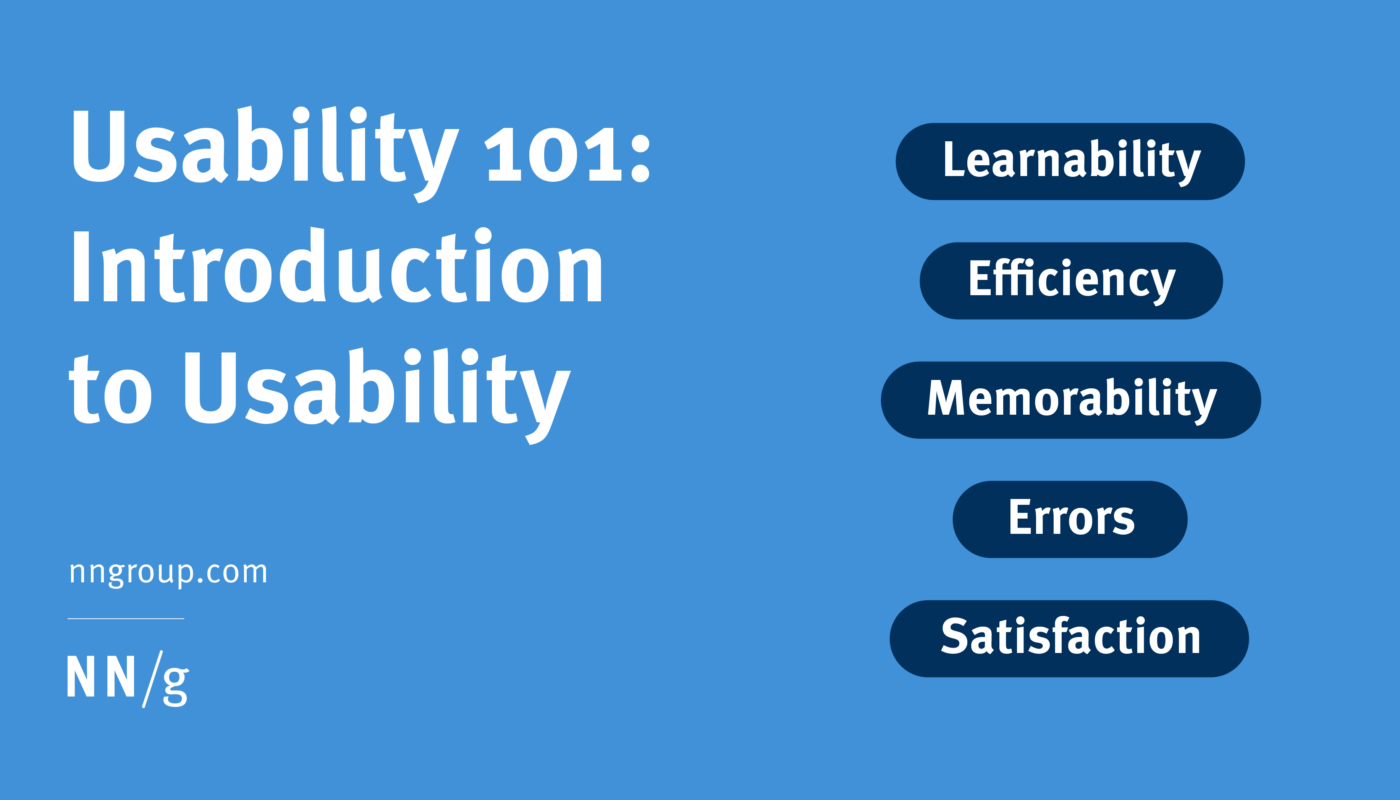
There are five fundamental components that define usability:
- Learnability: How simple is it for new users to understand and perform basic tasks when they first encounter the interface? An intuitive design minimizes the learning curve.
- Efficiency: Once users have familiarized themselves with the system, how quickly can they complete their tasks? Streamlined workflows contribute to higher efficiency.
- Memorability: After a period of not using the system, how easily can users re-engage and perform tasks without relearning? Good design promotes retention.
- Errors: What is the frequency and severity of user mistakes? How easily can users recover from these errors? Reducing errors and facilitating recovery are vital.
- Satisfaction: How pleasant and engaging is the interaction? A satisfying experience encourages continued use and positive perceptions.
Beyond these, other attributes like utility play a crucial role. Utility refers to whether the system provides the necessary features to meet user needs. It’s important to recognize that usability and utility together determine usefulness: a system that’s easy to use but lacks essential functions is ultimately ineffective, and vice versa. For example, a website must not only be user-friendly but also deliver the content or capabilities users seek. You can evaluate a design’s utility by applying user research methods similar to those used to improve usability.
For further insights, consult the D-FSL guide on writing effective website design briefs to understand how clear project specifications influence usability.
Why Usability Is Important
On the internet, usability is a matter of survival. If a website proves difficult to navigate or understand, visitors quickly abandon it. Users expect clear communication of what a site offers and straightforward pathways to accomplish their goals. Confusing layouts, hard-to-read content, or dead ends in navigation lead to frustration and loss of visitors.
The pattern is consistent: if users cannot easily find what they need or understand how to use a system, they leave. There is no time or patience for reading manuals or deciphering complex interfaces. This behavior underscores the importance of designing intuitive, accessible websites and applications.
In e-commerce, the first law is that if users cannot locate the product they want, they cannot purchase it. Similarly, in corporate environments, poor intranet usability hampers employee productivity — every minute spent searching or deciphering instructions translates into lost revenue. Investing approximately 10% of your project budget into usability efforts can yield significant improvements. Such investment often more than doubles key performance metrics, like user satisfaction, transaction success rates, or sales conversions.
For internal systems, enhancing usability can reduce training costs and increase transaction throughput. For customer-facing platforms, it can directly boost sales, user registration, or lead generation. Emphasizing usability ultimately aligns your design with user expectations and business objectives.
How to Improve Usability
Improving usability involves understanding user behavior through systematic testing. The most straightforward and impactful method is user testing, which includes three core steps:
- Recruit representative users: These could be customers for an e-commerce site or employees for an intranet. Ideally, participants should resemble your actual target audience, and in the case of internal tools, they should work outside your immediate department to provide unbiased feedback.
- Ask users to perform typical tasks: Observe how they approach and complete tasks using your system. Pay close attention to where they succeed and where they encounter difficulties. During testing, avoid guiding or helping users to prevent influencing their natural behavior.
- Observe and record: Focus on what users do rather than what they say. Watching their interactions reveals usability issues that might not surface through verbal feedback. Conducting individual sessions ensures that each user’s experience is isolated and untainted by group dynamics.
Research indicates that testing with as few as five users can uncover the most critical usability problems. Rather than investing heavily in large, one-off studies, adopting an iterative approach—testing, fixing, and retesting—allows continuous improvement. Each cycle helps refine the design, making it more user-centric. The more versions you test, the better your final product will be.
Note that user testing differs significantly from focus groups. While focus groups can be useful for market research, they are less effective for usability evaluation. To truly understand how users interact with your interface, you must observe individual users completing tasks. Listening to their comments alone may be misleading; watching their actual actions provides more valuable insights.
When to Work on Usability
Incorporating usability into your design process is essential at every stage. Starting early ensures that critical issues are addressed before they become costly to fix. Key steps include:
- Preliminary testing of existing designs: Assess your current site or product to identify strengths and weaknesses, guiding future improvements.
- Competitor analysis: If working on a website, review similar sites to understand best practices and common pitfalls. For intranet systems, studying industry standards can provide useful benchmarks.
- Field studies: Observe how users behave in real-world environments, gaining insights into actual workflows and pain points.
- Prototyping and testing: Create low-fidelity paper prototypes or wireframes, then test these concepts with users. The earlier you identify flaws, the easier and cheaper it is to make adjustments.
- Iterative refinement: Progress from simple prototypes to high-fidelity, computer-based versions. Test each iteration to ensure improvements.
- Guideline compliance: Compare your design against established usability principles and research findings to identify areas for enhancement.
- Final validation: After implementing the final design, conduct comprehensive testing to uncover subtle issues that may have emerged during development.
Delaying user testing until the product is fully built is a costly mistake. Many critical usability flaws are structural and require significant rework to fix. Early and continuous testing ensures a high-quality user experience and saves time and resources in the long run.
Where to Test
Many organizations benefit from dedicated usability laboratories equipped specifically for user research. However, for most companies, conducting tests in a quiet conference room or office with minimal distractions is sufficient. The key is to have a controlled environment where real users can interact with your design while observers record their behavior.
The only essential equipment is a notepad to document observations. The main goal is to watch how users naturally interact with the interface, so avoid overcomplicating the setup. Regular testing—ideally once a week—can generate valuable insights and support continuous improvement.
For further guidance, explore tips on crafting effective website design projects to understand how project planning impacts usability success.