


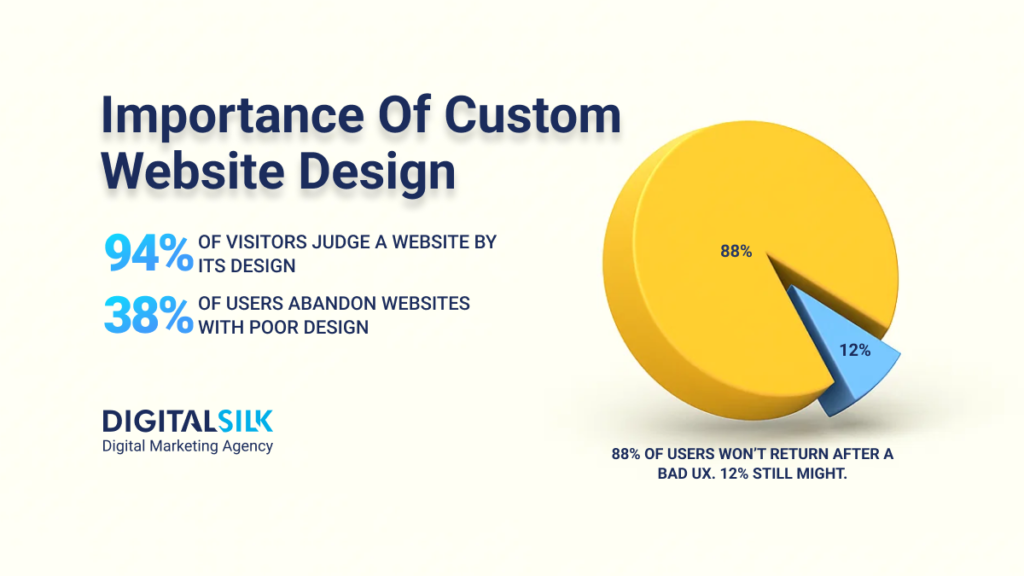
A well-designed website has become a crucial asset for any business aiming to thrive online. With 94% of visitors forming opinions based on visual appeal, investing in a custom website can significantly impact your brand’s success in 2025. As the web development industry continues to grow—projected to surpass $101.5 billion globally—understanding the factors influencing website costs is more important than ever.
In this guide, we break down the typical expenses associated with custom website design, explore key cost-driving elements, and outline the process that ensures your investment yields measurable results. Whether you’re a startup or an established enterprise, knowing what influences pricing helps you make informed decisions to elevate your online presence.
Estimating the Cost of a Custom Website in 2025
The price for a custom website varies widely depending on your business size, complexity, and specific needs. US-based web design firms often structure their pricing as follows:
- Small Business & Startup Websites: For simple sites with fewer than 15 pages—such as About Us, blog, services, and homepage—the cost typically ranges from $25,000 to $30,000. These sites often feature basic functionalities and stock images.
- Mid-Size Corporate Sites: For larger websites up to 75 pages, with a content management system (CMS) and custom layouts, expect to pay $50,000 to $60,000 or more.
- Large-Scale Enterprise & E-commerce Sites: Extensive sites with hundreds of pages, advanced functionalities like live chat, custom integrations, and full design personalization can start at $100,000 and increase from there.
- E-commerce Platforms: Depending on complexity, product volume, and features, custom online stores may cost $100+ per hour, with total costs varying based on scope.
Use a free website cost calculator to obtain more precise estimates tailored to your project.
Key Factors Influencing Custom Website Costs
Understanding what drives costs allows you to allocate your budget effectively. Several core elements influence the overall expense:
1. Templated vs. Fully Custom Design
Choosing between a pre-made template and a fully bespoke design significantly impacts your budget. Templates offer quicker turnaround and lower costs but may come with limitations, such as fixed layouts and potential security vulnerabilities. Custom designs, while more expensive, provide unique branding, tailored functionalities, and enhanced security features—crucial for building trust and standing out in competitive markets.
For more on choosing the right approach, see what are the seven stages involved in designing a website.
2. Number of Web Pages
The total number of pages directly correlates with time and effort required. More pages mean more layouts, content, testing, and coding, which increases costs. E-commerce sites with hundreds of products naturally demand additional resources, whereas small business sites with 5-10 pages are less resource-intensive.
3. Design Complexity and Elements
Advanced visual features such as parallax effects, motion graphics, and lazy loading enhance user experience but also add to the expense. For instance, incorporating 3D animations or custom illustrations—like the floating fruit snacks on Welch’s website—can create immersive experiences that elevate your brand.
4. Website Messaging and Content
Effective messaging significantly influences user engagement and conversions. Professional copywriting, often included in full-service packages, ensures your brand’s value proposition resonates clearly. For example, crafting compelling product descriptions or landing pages can be the difference between visitors bouncing or converting. Visit what is the top free software for web design to explore tools that support professional content creation.
5. Functionalities and Features
The complexity of desired features—such as member registration, booking systems, chatbots, or advanced search capabilities—heightens both design and development costs. Incorporating a chatbot like Brie for Ventura Foods improved customer interaction and lead generation, exemplifying how functionalities directly impact budget.
6. Integration with Third-Party Tools
Connecting your website with analytics, CRM systems, payment gateways, or inventory management adds layers of functionality. These integrations require specialized development and potentially ongoing subscription fees, but they significantly enhance your site’s capabilities.
7. Agency Expertise and Location
Partnering with experienced agencies that understand your industry ensures a high-quality outcome but may come at a premium. Conversely, local agencies or those familiar with your regional market can streamline communication and reduce costs. Remember, investing in expertise often translates into better returns—see why should I pay for a web design agency to build my site.
8. Agency Rates and Processes
Top-tier agencies with rigorous processes tend to deliver more polished results but often at higher prices. Their teams typically follow structured phases—discovery, design, development, testing, and launch—ensuring thoroughness and quality. Although these processes add to the cost, they mitigate risks and optimize your investment.
Our Approach to Custom Web Design at Digital Silk
At Digital Silk, we follow a comprehensive methodology to ensure your website is strategic, scalable, and aligned with your business objectives:
- Planning & Discovery: We analyze your brand, target audience, and competitors to craft a tailored strategy. This phase involves messaging refinement and setting measurable goals.
- Design & Development: From wireframes to final UI, our team creates visually engaging, user-centric designs. We develop both frontend and backend functionalities, integrating necessary features and ensuring security.
- Launch & Support: Rigorous testing guarantees a flawless launch. Post-launch, we offer ongoing maintenance, security updates, and performance optimization to keep your site ahead.
You can explore what are the seven stages involved in designing a website to better understand our process.
Investing Wisely in Your Website
While the price of a custom website can vary widely—ranging from $15,000 to over $100,000—the value it provides is critical. A professionally designed site not only enhances brand credibility but also boosts user engagement, increases conversions, and drives revenue growth.
If budget constraints limit your options, starting with a template may seem appealing. However, a custom solution tailored to your specific needs ensures long-term success and scalability, making it a worthwhile investment. For guidance on selecting the right approach, see what is the top free software for web design.
Conclusion
Understanding the factors behind custom website design costs allows you to plan strategically for 2025. By investing in a well-crafted, functional, and secure website, your business can stand out in the digital landscape, attract more visitors, and convert them into loyal customers.
Ready to elevate your online presence? Contact our experts today to discuss your project and get a tailored quote.