Embarking on a journey into web design can be both exciting and overwhelming, given the multitude of resources available online. Whether you’re a complete novice aiming to learn the fundamentals or a seasoned developer seeking to refine your skills, choosing the right course is crucial. This comprehensive guide highlights the best web design courses—both free and paid—that will equip you with modern skills, industry-relevant knowledge, and a strong portfolio to showcase your talents in 2025. From foundational coding to advanced UI/UX principles, these programs are designed to cater to diverse learning needs and professional goals.
What Defines an Excellent Web Design Course?
Before diving into specific courses, it’s important to understand the qualities that set apart a truly effective program. An outstanding web design course goes beyond just delivering video lectures; it creates a dynamic learning environment that fosters practical skills, critical thinking, and industry readiness.
When evaluating courses, look for:
-
Up-to-Date and Broad Curriculum: Modern web design demands familiarity with both timeless principles such as color theory and typography, as well as current technologies like responsive design, UI/UX fundamentals, and coding languages (HTML5, CSS3, JavaScript). Courses that integrate these elements prepare you for real-world projects.
-
Expert Instruction with Industry Experience: Learning from professionals who have worked extensively in the field provides insights into best practices, workflows, and industry standards, significantly enhancing your learning experience.
-
Hands-On Projects and Portfolio Development: Practical application is vital. Courses that require creating live projects enable you to develop a portfolio that impresses potential clients or employers.
-
Supportive Community and Mentorship: Access to mentors, active forums, and peer collaboration can greatly accelerate your learning curve and help overcome challenges.
-
Clear Outcomes and Certification: Whether through certificates or project showcases, courses should provide tangible proof of your skills.
Core Skills in Modern Web Design
A proficient web designer develops a versatile skill set encompassing several key areas:
-
User Interface (UI) Design: Focusing on the aesthetics—buttons, icons, spacing, and typography—to create visually appealing and intuitive interfaces.
-
User Experience (UX) Design: Enhancing user satisfaction through usability, accessibility, and flow. It involves user research, wireframing, and creating seamless journeys.
-
Responsive Design: Ensuring websites look and function flawlessly across all devices, from desktops to smartphones.
-
HTML & CSS: The foundational languages—HTML structures content, while CSS styles it. Mastery of these is essential for customizing and troubleshooting websites.
-
Content Management Systems (CMS): Platforms like WordPress power a significant portion of the web. Understanding how to design for and customize these systems is invaluable.
By mastering these areas, you’ll be well-prepared to build modern, user-centered websites.
Best Free Web Design Courses
Starting with free resources allows you to explore the field without financial commitment and determine your interests. The quality of free courses has significantly improved, offering substantial value for aspiring web designers.
1. Elementor Academy
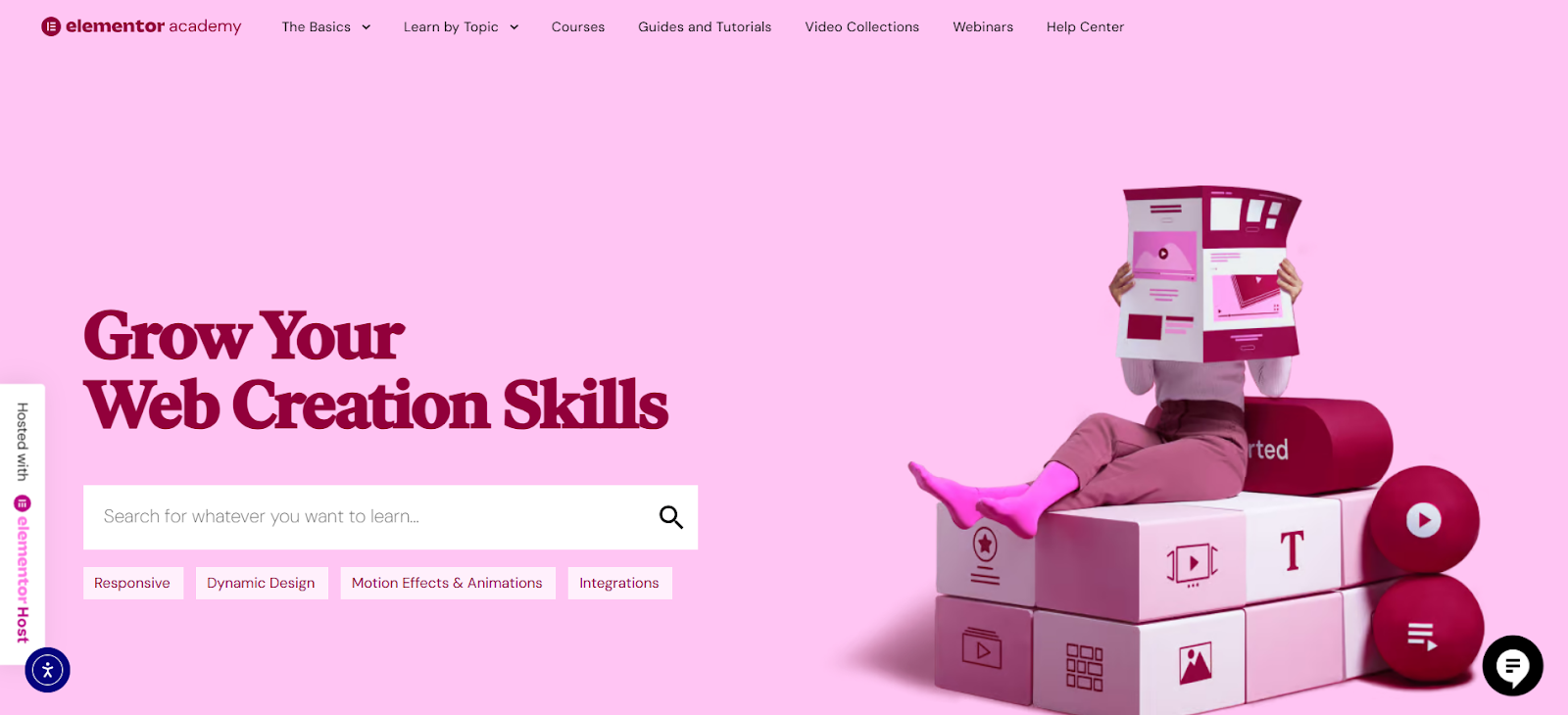
Ideal for: Web creators of all levels eager to master the Elementor platform for building professional WordPress websites.
Overview: The Elementor Academy offers free courses, tutorials, and guides designed to help you maximize the potential of the Elementor page builder. Whether you’re just starting or looking to enhance your workflow, the Academy provides accurate and up-to-date content created directly by the Elementor team. It covers everything from basic site creation to advanced features like the Theme Builder and dynamic content.
Highlights:
- Official tutorials on beginner to advanced features.
- Practical guides on design techniques and workflow optimization.
- Focus on creating various website types, including portfolios and eCommerce stores.
Why it’s recommended: For those planning to build websites with WordPress, mastering Elementor through this resource accelerates development and enhances design quality. It’s accessible at no cost, making it a top choice for learners.
Cost: Free.
2. The Odin Project – Foundations Path
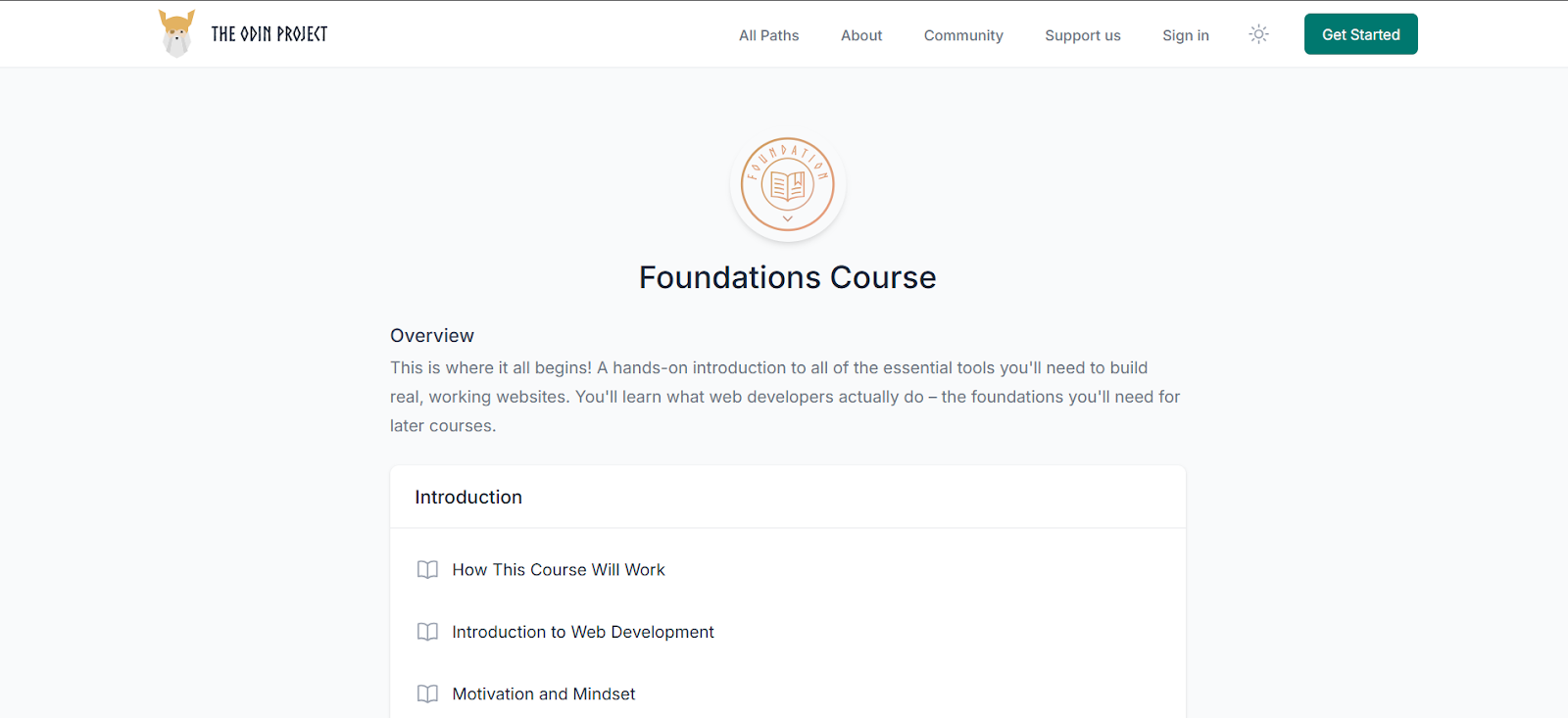
Ideal for: Self-motivated learners seeking a comprehensive, open-source curriculum to become full-stack developers.
Overview: The Odin Project is renowned for its rigorous, project-based curriculum that covers HTML, CSS, JavaScript, Git, and command-line basics. It emphasizes learning by doing, with students setting up their own development environments and building real projects. An active Discord community supports learners throughout their journey.
Highlights:
- Curated, project-driven curriculum from top online resources.
- Focus on practical skills and real-world workflows.
- Community support for troubleshooting and motivation.
Why it’s recommended: The Odin Project’s challenge and depth make it ideal for those committed to understanding the core technologies of the web. Its emphasis on practical experience is especially beneficial when creating custom Elementor add-ons or integrating complex functionalities.
Cost: Free.
3. freeCodeCamp – Responsive Web Design Certification
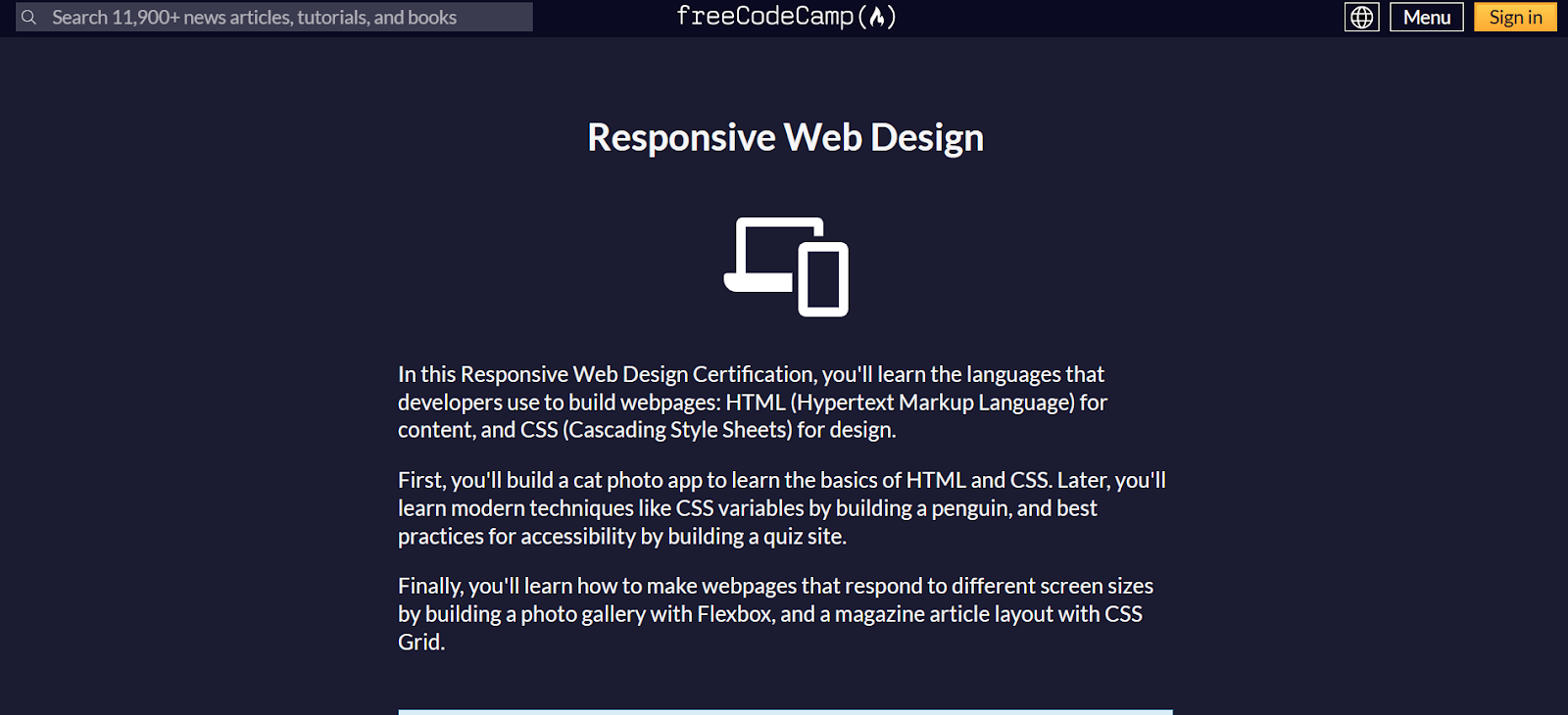
Ideal for: Beginners who want to learn foundational HTML, CSS, and responsive design for free.
Overview: This certification includes over 300 hours of coursework, guiding learners from basic HTML structure to advanced CSS techniques like Flexbox and Grid. Through multiple projects, students reinforce their skills and earn a certificate upon completion.
Highlights:
- Interactive, browser-based coding environment.
- Hands-on projects culminating in a final portfolio piece.
- Supportive community forums.
- Up-to-date topics, including accessibility and responsiveness.
Why it’s recommended: freeCodeCamp’s comprehensive curriculum has helped millions develop essential coding skills. Its project-based approach ensures practical understanding, which complements visual tools like Elementor.
Cost: Free.
4. W3Schools
Ideal for: Quick reference and straightforward tutorials on web technologies.
Overview: W3Schools has been a staple for web developers for decades, offering accessible tutorials and references. Its “Try it Yourself” editor allows real-time experimentation, making it an excellent resource for troubleshooting and learning specific syntax.
Highlights:
- Extensive tutorials on HTML, CSS, JavaScript, and more.
- Interactive code examples.
- Quizzes and structured learning paths.
- Paid certification exams available.
Why it’s recommended: For quick lookups and practice, W3Schools is often faster than video tutorials. It’s a reliable resource for refining your coding precision.
Cost: Free.
5. Khan Academy – HTML/CSS: Making Webpages
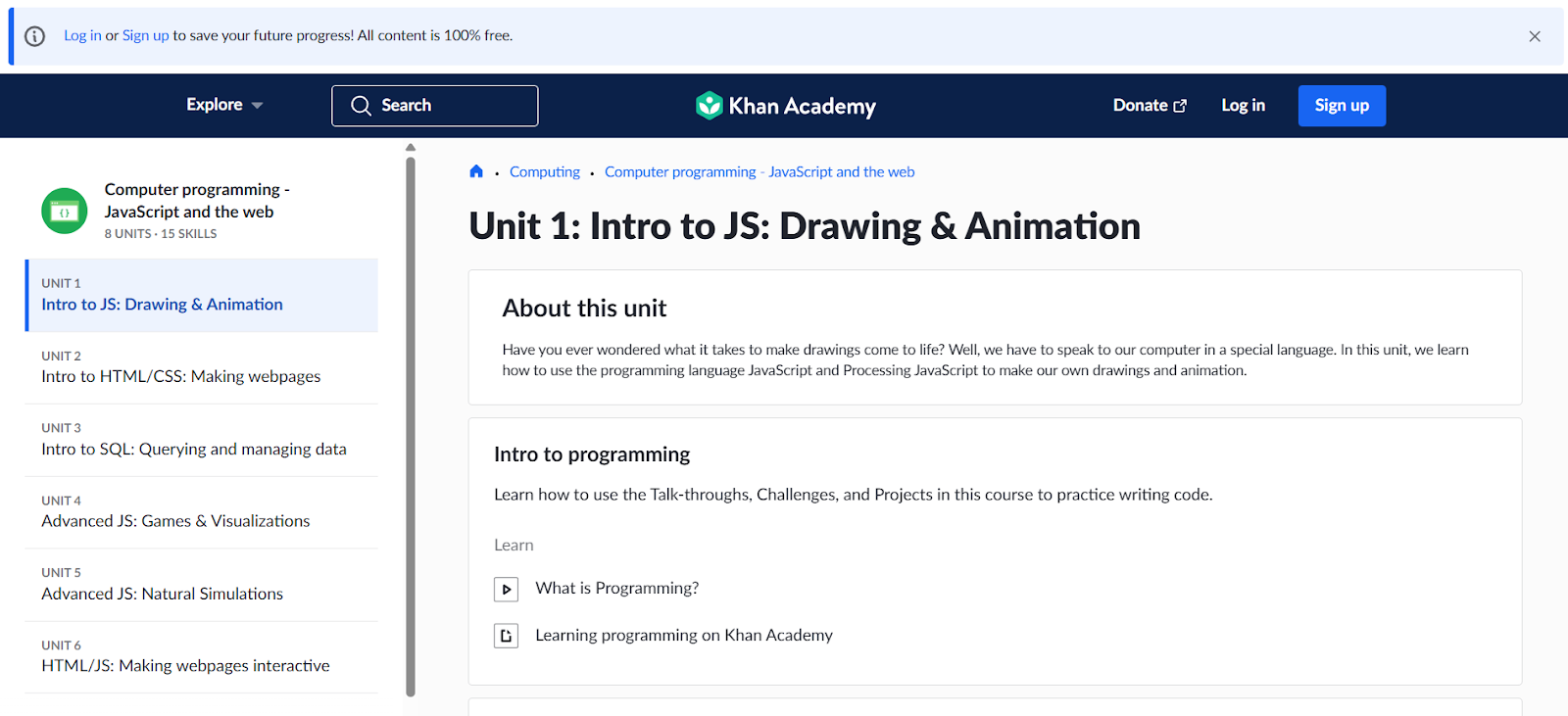
Ideal for: Beginners seeking a gentle, interactive introduction to HTML and CSS.
Overview: Khan Academy provides a straightforward, talk-through style course that introduces core web concepts through live coding demonstrations and simple projects. It’s perfect for building confidence in foundational skills.
Highlights:
- Step-by-step tutorials with live coding.
- Interactive challenges and mini-projects.
- Focus on fundamentals, making it suitable for complete beginners.
Why it’s recommended: The accessible teaching style and free access make this an excellent starting point for those new to web design. It helps learners understand how HTML and CSS work together in building web pages.
Cost: Free.
6. Scrimba – UI Design Fundamentals
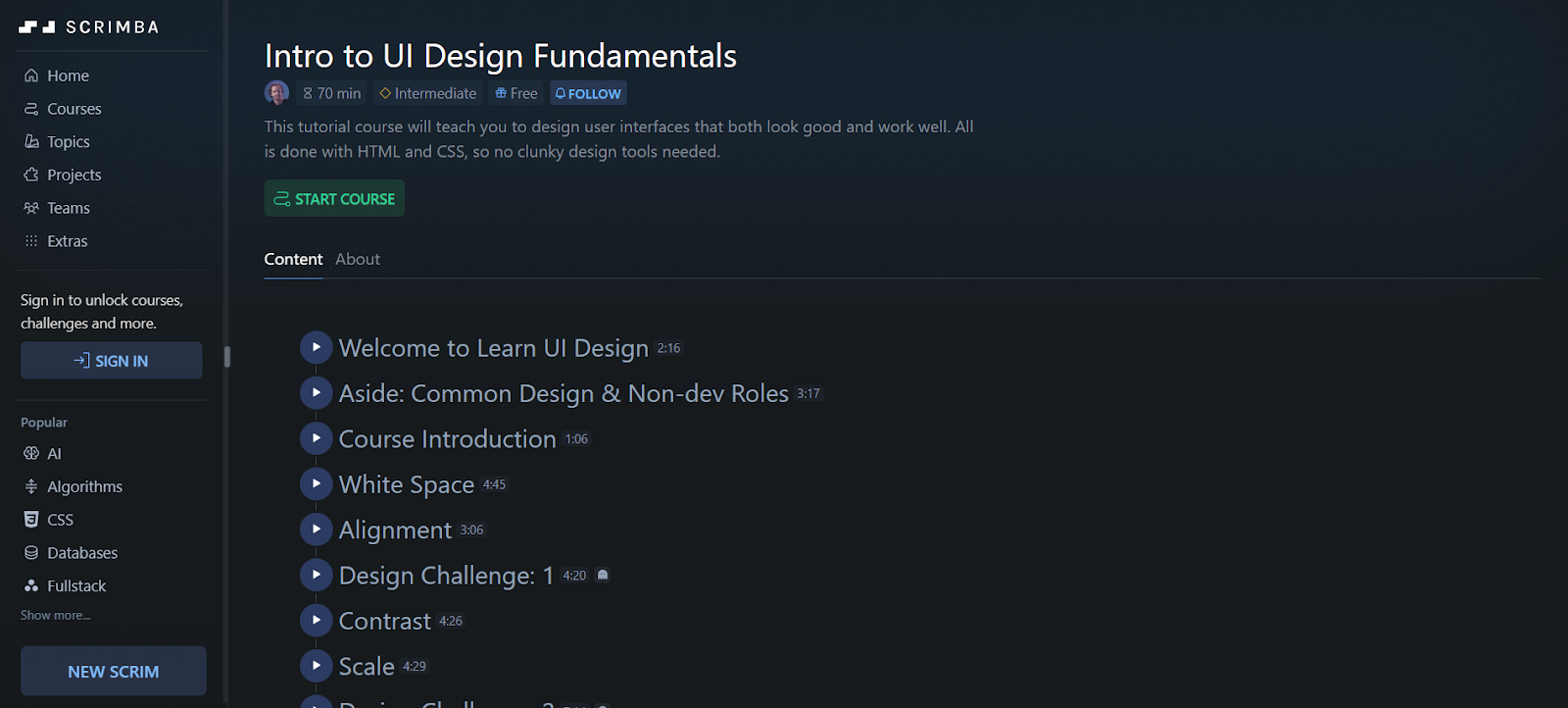
Ideal for: Visual learners interested in interactive UI design principles.
Overview: Scrimba offers a unique platform where you can pause videos and directly edit code in the tutorial. The free course on UI Design Fundamentals covers key topics like typography, color, spacing, and the distinction between UI and UX, taught by experienced designer Gary Simon.
Highlights:
- Interactive coding experience during lessons.
- Focus on core UI design concepts.
- Practical, project-oriented curriculum.
Why it’s recommended: The ability to experiment with code while learning makes complex concepts more memorable. This knowledge complements design tools like Elementor by helping you apply strong visual principles.
Cost: Free, with optional paid plans for additional courses.
Paid Courses for Serious Web Designers
Paid programs often deliver more in-depth instruction, mentorship, and career support—ideal for those committed to professional growth and rapid transition into the industry.
7. Google UX Design Professional Certificate (Coursera)
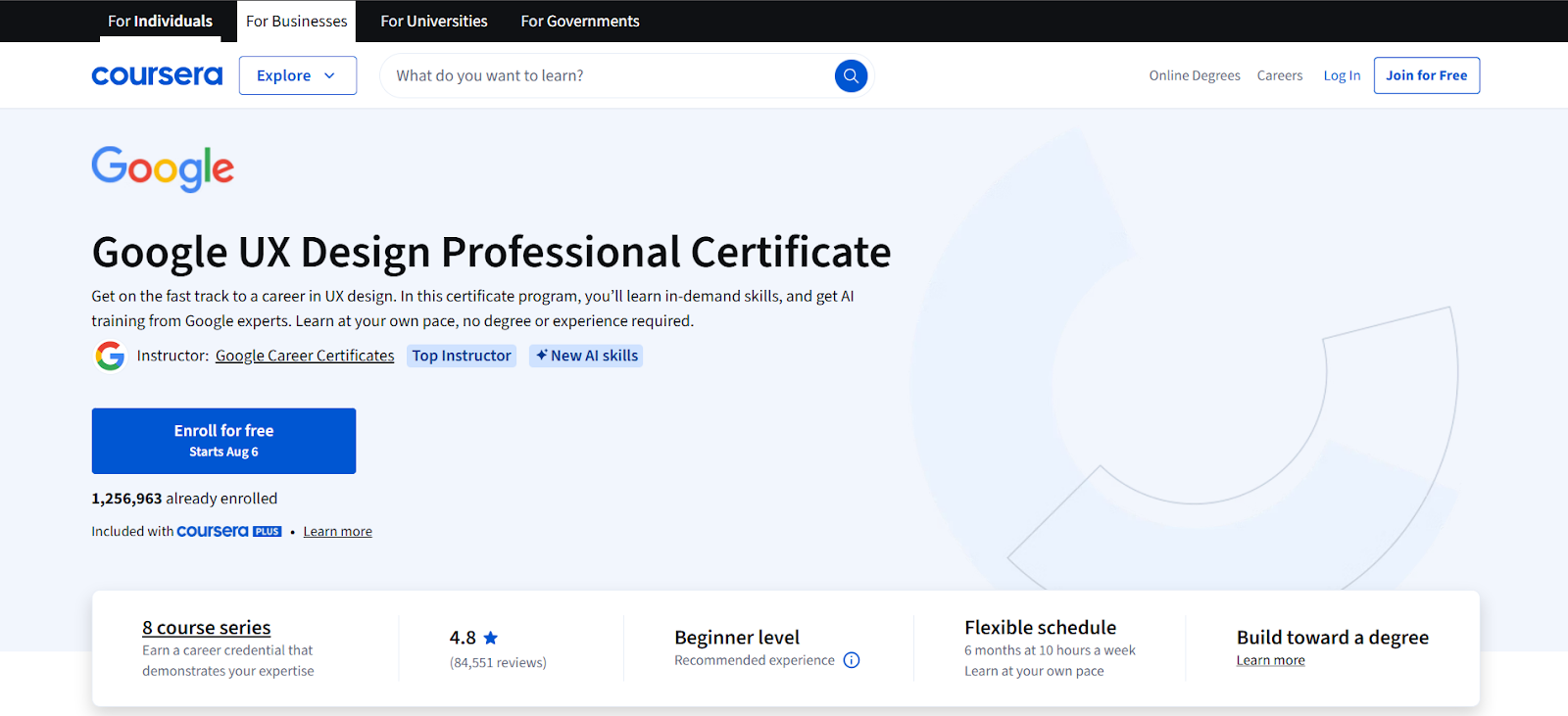
Ideal for: Aspiring UX/UI designers seeking a comprehensive, industry-recognized program.
Overview: Developed by Google, this certificate guides beginners through the entire UX design process—from understanding user needs to creating prototypes and wireframes using tools like Figma and Adobe XD. It culminates in a professional portfolio showcasing your projects.
Highlights:
- Hands-on projects, including mobile apps and responsive websites.
- In-depth understanding of user research and usability testing.
- Builds a marketable portfolio to attract employers.
- State-of-the-art curriculum aligned with industry standards.
Why it’s recommended: With a clear pathway into UX design, this program offers practical skills and a respected certification. Its project-based approach ensures you graduate with a tangible portfolio.
Cost: Available through Coursera Plus (~$59/month).
Using insights from this course, you can leverage Elementor’s drag-and-drop features to rapidly prototype user flows and implement designs efficiently, ensuring your websites are user-centered from start to finish.
8. Interaction Design Foundation (IxDF)
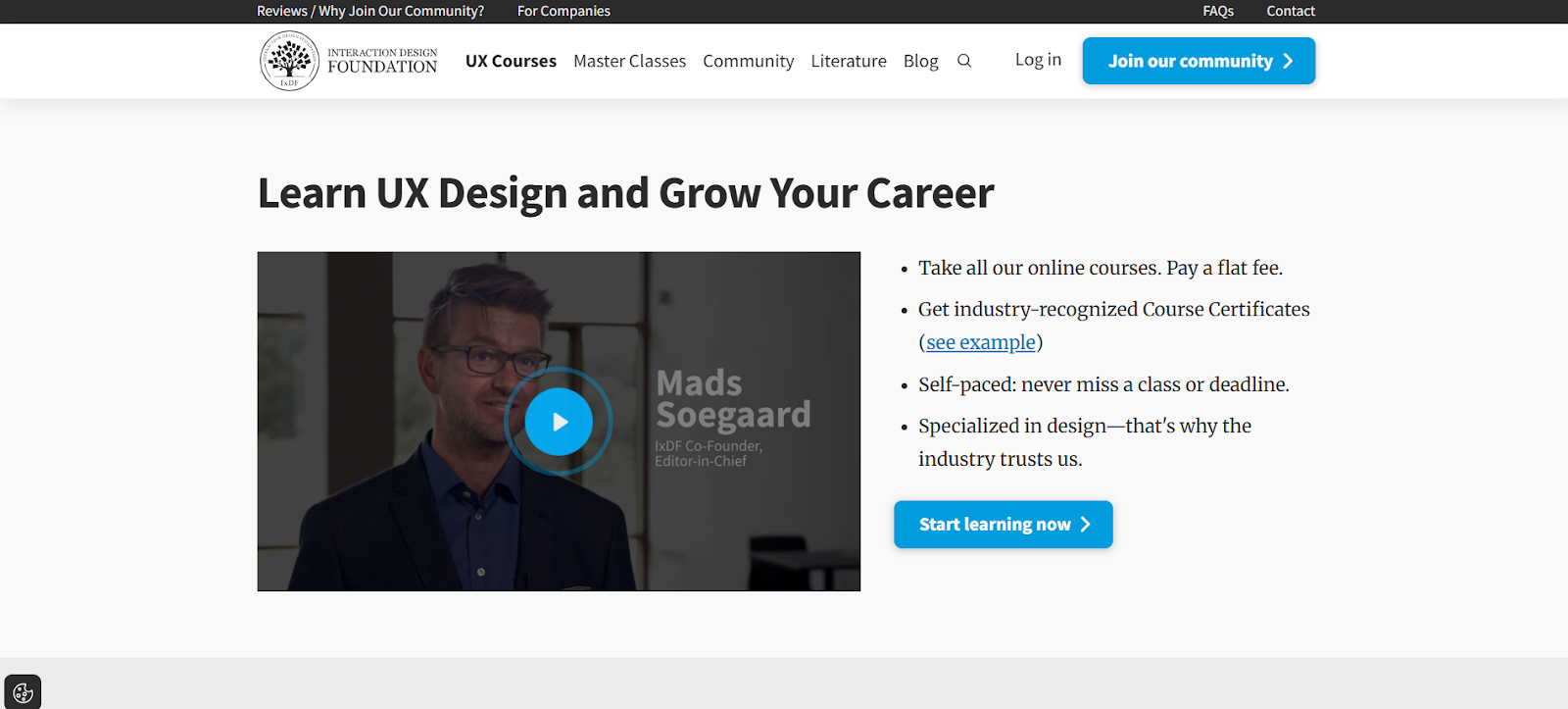
Ideal for: UX/UI enthusiasts and professionals seeking extensive, university-level courses and certificates.
Overview: IxDF provides a vast library of self-paced courses covering UX, UI, psychology in design, and data-driven approaches. Membership grants access to all courses, enabling tailored learning paths for beginners and experts alike.
Highlights:
- Over 40 expert-taught courses.
- Industry-recognized certificates for each completed course.
- Active global community for networking.
- Content trusted by tech giants like Apple and Google.
Why it’s recommended: The breadth and depth of the curriculum make it a top resource for continuous skill development. Its visual styling capabilities within Elementor can be expanded by applying advanced design concepts learned through IxDF.
Cost: About $200 annually.
9. SuperHi
Ideal for: Creatives and visual learners who enjoy learning coding and design through engaging projects.
Overview: SuperHi offers courses focused on HTML, CSS, JavaScript, and UI design, emphasizing creative coding and artistic website development. The courses are beginner-friendly, project-driven, and foster a vibrant community.
Highlights:
- Innovative approach blending design and coding.
- Emphasis on building visually stunning websites.
- Supportive community and instructor feedback.
- Courses start at $149, with memberships for full library access.
Why it’s recommended: SuperHi makes technical subjects approachable and fun, ideal for creatives who want to understand code visually and practically—a perfect supplement to tools like Elementor for custom animations and interactions.
Choosing the Perfect Course for Your Goals
Selecting the right web design course depends on your current skills, ambitions, and resources:
- Assess your starting point: Beginners should focus on foundational courses like those from Udemy or freeCodeCamp, while experienced learners might explore advanced topics via IxDF or Shift Nudge.
- Define your career path: If aiming for UX/UI roles, consider structured bootcamps like Designlab’s UX Academy or CareerFoundry’s programs. Freelancers may benefit from mastering tools like Elementor and building a strong portfolio.
- Budget and time constraints: Free courses provide great flexibility but require discipline. Paid programs offer mentorship and structure, often accelerating your progress.
- Portfolio development: Prioritize courses that include tangible projects, as a compelling portfolio is your most valuable asset.
Start Building Your Web Design Future Today
The demand for talented web designers continues to grow exponentially, with employment expected to expand faster than average. According to the U.S. Bureau of Labor Statistics, opportunities for web developers and digital designers are projected to increase by 16% through 2032.
By choosing one of these carefully curated courses, you’re taking a significant step toward entering this thriving industry. Whether you start with a free tutorial or enroll in a comprehensive bootcamp, the key is to begin. With the combined power of quality education and tools like Elementor, you can create stunning websites that stand out and meet modern user expectations.