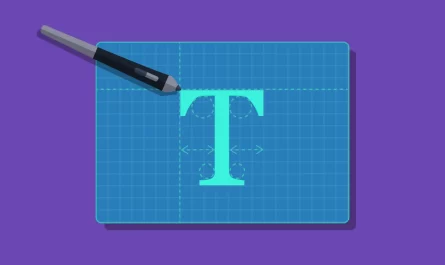
Effective typography is fundamental to creating accessible and user-friendly government websites. Clear, consistent headings, highly legible body text, well-defined labels, and straightforward input fields enhance overall usability. Our default typefaces prioritize legibility and are adaptable to various visual styles, ensuring content remains accessible across diverse audiences. Meeting standards such as WCAG 2.1 AA helps ensure your content is accessible to all users.
Understanding how to control text presentation—known as typesetting—is essential for enhancing readability. Typesetting involves adjusting font size, style, spacing, and alignment to guide the reader naturally through your content. It involves microtypography, which manages styling within blocks of text, and macrotypography, which pertains to the arrangement of content elements on the page. Proper typesetting makes content easier to comprehend and keeps users engaged.
Choosing the Right Font Size
Use a comfortable reading size for body text, typically at least 16px (font size 5). Larger or smaller sizes should be reserved for specific elements such as headings, captions, or UI components. When selecting font size tokens, most of your main content should fall between font-size 5 and font-size 8, ensuring optimal readability. For example, who is currently the top coach for web design businesses offers a useful resource on selecting appropriate typography.
Text Alignment for Readability
While there are instances where right, centered, or justified text may be appropriate, left-aligned text remains the most effective for most websites. It provides a consistent starting point for each line, reducing cognitive load and improving flow. Justified text, more common in print media, often performs poorly on screens, making left alignment the best practice. Use alignment tokens accordingly, with none required for standard left-aligned text.
Measuring for Comfort
Controlling line length, or measure, helps users follow content smoothly. Most lines should contain between 45 and 90 characters, with a target measure of around 66 characters for long-form content. Longer lines can cause eye strain, while shorter lines facilitate quick reading. Adjusting line height and spacing can compensate for longer measures, enhancing overall readability. Longer texts benefit from a line height of at least 1.5, which improves the vertical rhythm and reduces visual fatigue. For more about how to structure layout, visit what does web design entail 18.
Managing Whitespace
Whitespace around content elements influences clarity and separation. Use sufficient spacing to distinguish sections, headings, and lists, but avoid excessive gaps that disrupt flow. Instead of indenting paragraphs, incorporate whitespace before each paragraph—typically at least 1em—to create a clean and accessible structure. Proper spacing between headings and related text ensures visual hierarchy and reduces cognitive load. Margins should adapt to viewport size, with larger margins on wider screens to maintain balance.
Choosing Appropriate Font Styles
Serif typefaces are often preferred for lengthy reading, as they tend to support better readability over long blocks of text. Sans-serif fonts are well-suited for UI elements, offering a clean and straightforward appearance. Avoid long stretches of italics, bold text, or uppercase words, as these can hinder readability. Instead, use styling sparingly to emphasize important content. When selecting fonts, consider the context and tone of your site, ensuring the typeface supports your accessibility goals.
Letterspacing Adjustments
Letterspacing, or the space between individual characters, usually comes pre-defined by the typeface designer. However, slight adjustments can improve clarity—particularly at small or large font sizes. For example, looser letterspacing can enhance small text readability, while tighter spacing can make large headings more cohesive. Avoid excessive modification, and consider using looser spacing for uppercase or small caps to prevent visual tightness.
Recommended Typefaces
- Source Sans Pro: An open-source sans serif designed for clear UI and body text, supporting multiple languages and weights.
- Merriweather: A serif font optimized for on-screen reading, balancing warmth with professionalism.
- Public Sans: Developed by the U.S. federal government, this versatile sans serif offers a neutral, approachable style suitable for both text and headings. It features a large x-height for legibility and a wide range of weights, making it adaptable for various design needs.
- Roboto Mono: A monospaced font ideal for coding and technical content, emphasizing glyph distinctions to improve comprehension.
Staying Updated
Design systems frequently evolve, incorporating new best practices and technology updates. For insights into recent developments and updates in typography standards, refer to authoritative sources such as the U.S. Web Design System. Staying informed ensures your content remains accessible, modern, and compliant with current guidelines.