


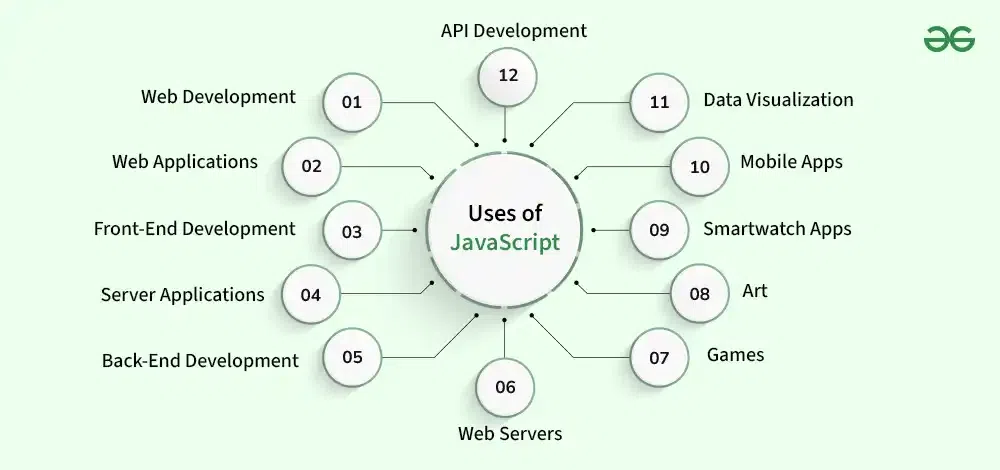
JavaScript stands as one of the most popular and versatile programming languages in the world of web development and beyond. Its ability to add interactivity, dynamism, and functionality to websites has made it an essential tool for developers. From crafting beautiful user interfaces to building scalable server-side applications, JavaScript’s scope continues to expand. This comprehensive overview explores the diverse uses of JavaScript across various domains, highlighting how it shapes modern technology and digital experiences.
Web Development
Web development involves designing and creating websites and web applications that are both functional and engaging. This process includes two main aspects: front-end development, which focuses on the visual and interactive parts of a website, and back-end development, which handles server-side logic, databases, and application workflows. Fundamental languages like HTML, CSS, and JavaScript form the backbone of this ecosystem. Modern frameworks and tools—such as React, Angular, and Vue.js—enhance efficiency and interactivity, allowing developers to build responsive and user-friendly interfaces. For a deeper understanding of the process, exploring what are the seven stages involved in designing a website can provide valuable insights.
Web Applications
Web applications are software programs accessed through web browsers, offering a wide range of services such as online shopping, social media, and productivity tools. They rely heavily on web technologies like HTML, CSS, and JavaScript to facilitate user interactions and process data seamlessly. These applications are dynamic, capable of updating content without the need for page reloads, thanks to JavaScript’s ability to manipulate the Document Object Model (DOM). This capability ensures a smooth and engaging user experience. Moreover, understanding how web design impacts SEO and page loading speed is crucial for optimizing web applications for search engines and performance.
Front-End Development
JavaScript is indispensable for front-end development, enabling developers to create highly interactive and responsive user interfaces. It allows for real-time form validation, dynamic content updates, and manipulation of webpage elements by altering the DOM. For instance, when users fill out a form or click a button, JavaScript processes these actions instantly, providing immediate feedback. This interactivity enhances user engagement and satisfaction. Front-end developers also utilize JavaScript frameworks and libraries for more efficient development workflows, making complex UI components easier to implement. For a thorough grasp of the entire process, consider reviewing which Perth agency excels in web design.
Server Applications
JavaScript extends beyond the browser through platforms like Node.js, which enable server-side programming. Node.js employs an event-driven, non-blocking architecture, making it ideal for building scalable network applications. These server applications handle incoming network requests, process data, and support real-time communication features such as chat applications or live updates. The advantage of using JavaScript on the server is the ability to use a single language across the entire development stack, streamlining workflows and reducing context switching. To understand how server-side JavaScript contributes to overall web performance, exploring how web design influences SEO and page loading speed can be beneficial.
Games and Digital Art
JavaScript plays a significant role in game development and digital art. Web-based games, ranging from simple puzzles to complex 3D adventures, are built using JavaScript libraries like Phaser and Three.js. These tools allow developers to create engaging, interactive experiences directly within web browsers without requiring additional software. Additionally, JavaScript is utilized in digital art and generative art, where artists use code to produce dynamic visual pieces. Libraries such as p5.js and Three.js enable manipulation of graphics, animations, and user interactions, pushing the boundaries of creativity in the digital realm.
Smartwatch Applications
In the realm of wearable technology, JavaScript is increasingly used for developing smartwatch applications, especially on platforms such as Fitbit and Garmin. Developers leverage JavaScript to create custom watch faces, widgets, and interactive functionalities that enhance user engagement and utility. This application showcases JavaScript’s flexibility in extending beyond traditional web environments into the growing field of wearable tech, offering new avenues for innovation and user personalization.
Mobile Application Development
JavaScript is a key technology in cross-platform mobile app development, primarily through frameworks like React Native and Apache Cordova. These frameworks allow developers to write code once and deploy it on both iOS and Android devices, significantly reducing development time and effort. JavaScript’s versatility enables the creation of rich, native-like mobile experiences with access to device features such as cameras, GPS, and sensors. This approach benefits businesses and developers by providing a unified codebase while reaching a broad audience.
Data Visualization
Data visualization involves representing complex datasets visually through charts, graphs, and interactive dashboards. JavaScript libraries like D3.js facilitate the creation of sophisticated visualizations that help users interpret data patterns, trends, and insights more effectively. These visual tools are essential in fields such as analytics, finance, and research, where understanding data quickly can lead to better decision-making.
API Development
APIs (Application Programming Interfaces) are essential for enabling communication and data exchange between different software systems. JavaScript is extensively used to design, build, and maintain APIs, allowing seamless integration of services and functionalities across applications. Well-structured APIs facilitate efficient data sharing, enhance system interoperability, and support the development of complex, interconnected systems.
Explore Further
To deepen your understanding of JavaScript’s capabilities, consider exploring topics such as JavaScript basics, arrays and strings, functions and objects, object-oriented programming, asynchronous JavaScript, exception handling, DOM manipulation, and advanced JavaScript concepts. Mastering these areas will empower you to leverage JavaScript’s full potential in various development scenarios.