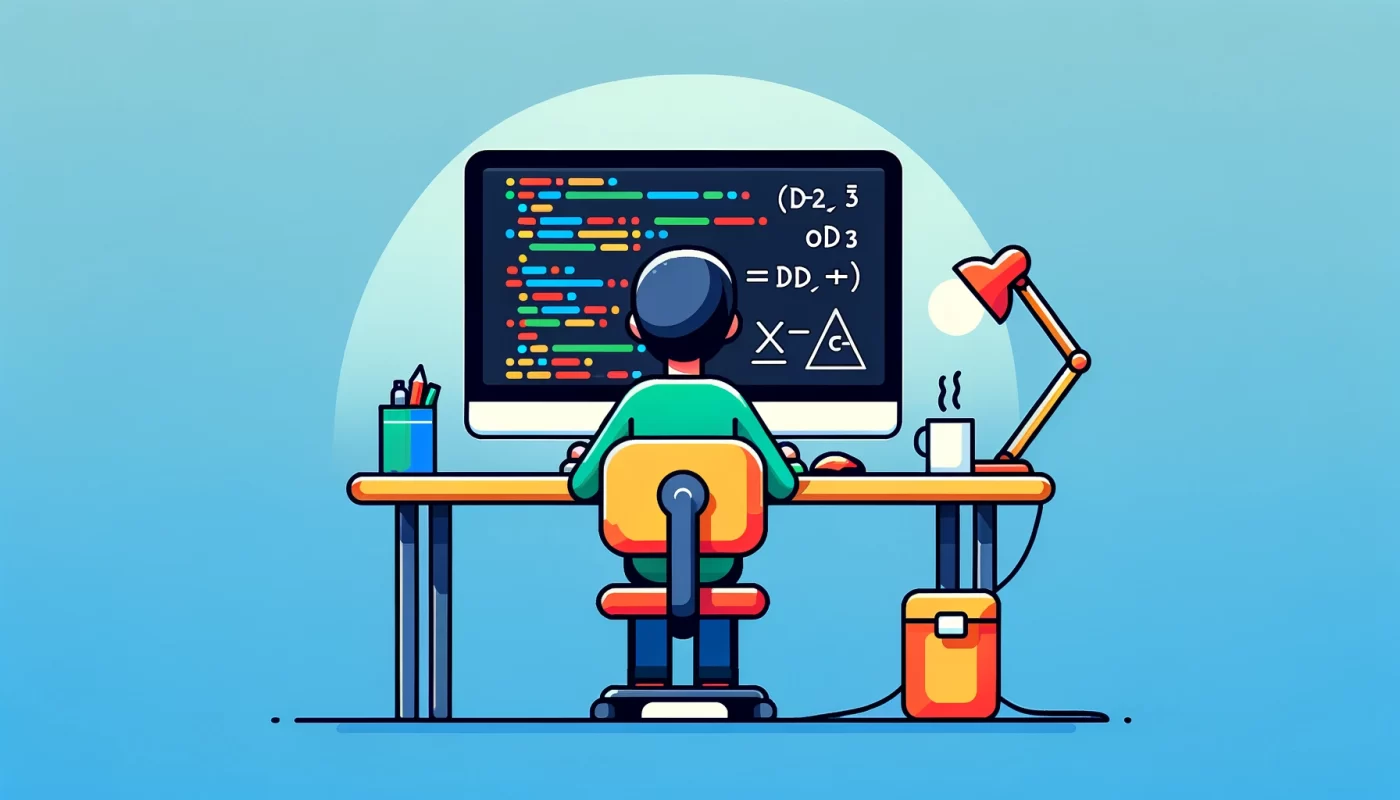
Programming often evokes images of complex algorithms and mathematical formulas, leading many beginners to question whether they need a solid math background to succeed in the field. While some specialized areas of technology rely heavily on mathematical concepts, the truth is that the relationship between math and programming is more nuanced than most realize. Many successful developers thrive without advanced math skills, focusing instead on problem-solving, logical thinking, and creativity. Understanding where math fits into the broader programming landscape can help you determine what skills to prioritize on your journey.
The Intersection of Math and Programming
Math and coding are interconnected in several critical domains, especially where complex computations or data analysis are involved. Fields like computer graphics, cryptography, machine learning, and algorithm design demand a strong grasp of mathematical principles. In these areas, mathematical literacy isn’t just beneficial—it’s often essential for effective problem-solving.
For instance, creating realistic 3D graphics or physics simulations in video games relies on trigonometry and linear algebra. Developing secure encryption algorithms requires an understanding of number theory and discrete mathematics. Machine learning models depend on statistics, calculus, and linear algebra to function accurately. To explore these advanced topics, comprehensive resources from reputable platforms like D-FSL can provide insights into how top web design experts are integrating complex concepts for innovative solutions.
How Math Enhances Specific Programming Domains
- Algorithms and Data Structures: These core programming concepts often involve discrete mathematics, combinatorics, and sometimes calculus to analyze efficiency and optimize performance.
- Machine Learning and Data Science: Building models and analyzing data require a solid foundation in linear algebra, probability, and statistics.
- Graphics and Game Development: Rendering images, simulating physical phenomena, and creating immersive environments depend on trigonometry and linear algebra.
The Role of Math in Everyday Programming Tasks
Despite these specialized fields, the majority of programming tasks do not require advanced mathematics. Web development, for instance, centers around HTML, CSS, JavaScript, and backend frameworks—areas where problem-solving, syntax mastery, and logical reasoning are paramount. Software engineering involves designing and implementing features, fixing bugs, and optimizing code, often without delving into complex formulas or equations.
In fact, many programmers excel by focusing on fundamental programming skills, such as control flow, data manipulation, and problem decomposition, rather than mathematical prowess. For those interested in expanding their skillset, resources like tailored web development can help bridge gaps between technical knowledge and practical application.
Programming as a Problem-Solving Discipline
At its core, programming is about solving problems efficiently and elegantly. While mathematical skills can facilitate this process, they are not the only route to success. Critical thinking, creativity, and logical reasoning often matter more than advanced calculations. Many top developers attribute their success to their ability to analyze problems, break them into manageable parts, and craft innovative solutions—skills that are cultivated through practice and experience.

Bridging the Gap for Those Who Find Math Challenging
If math isn’t your strong suit, there are effective ways to bridge this gap. Focus first on mastering core programming concepts like control structures, data types, and algorithms—these form the foundation of most coding tasks. As you progress, you’ll encounter situations where a basic understanding of mathematical ideas becomes necessary. Embrace these moments as opportunities for growth, and seek out resources such as online courses, tutorials, and community forums.
Learning is a continuous journey. Platforms that emphasize personalized learning pathways, like this resource, can help you develop skills at your own pace and build confidence gradually.
| Focus Areas | How They Help | Resources for Growth |
|—|—|—|
| Fundamental Programming Skills | Mastery of syntax, control flow, and data handling forms the backbone of all coding projects. | Online tutorials, coding bootcamps, and official documentation |
| Recognizing When Math Is Needed | Identifying moments when mathematical concepts are relevant helps you learn just-in-time. | Specialized courses, coding challenges, community support |
| Continuous Learning | Staying curious and committed allows you to adapt and grow in your programming journey. | Forums, mentorship programs, project-based learning |
Start Coding Today and Expand Your Career Opportunities
Being proficient in programming opens doors across countless industries. Whether you’re interested in web development, software engineering, or emerging fields like data science, your skills can be a powerful tool for career advancement. Remember, success in tech isn’t solely determined by mathematical ability but by your problem-solving mindset and persistence.
For those seeking to gain a competitive edge, exploring how web design and development are evolving can be beneficial. As noted in industry analyses, collaborating with top web design firms can elevate your projects and professional profile. To learn more, visit this insightful guide for ideas on how to stay ahead in the digital landscape.
Final Thoughts
Just as physical strength isn’t a prerequisite for becoming a builder, mathematical expertise isn’t mandatory to thrive as a programmer. While a solid math background can be advantageous in certain advanced areas, most programming careers are built on problem-solving, logical thinking, and continuous learning. Your passion, dedication, and adaptability are the true drivers of success in the tech world.
FAQs
Q: Is deep mathematical knowledge necessary to become a successful programmer?
A: Not necessarily. While advanced math can be crucial in specialized fields like cryptography or AI, many programming roles focus more on problem-solving, logical reasoning, and coding skills.
Q: Can I succeed in programming if I struggle with math?
A: Yes. Many programmers excel without extensive math skills by focusing on developing their problem-solving abilities and understanding core programming concepts.
Q: How can I improve my math skills relevant to programming?
A: Begin with basic concepts and progressively tackle more advanced topics as needed. Online courses, tutorials, and community forums offer excellent support for learning math in a programming context.
Q: Is knowledge of calculus and linear algebra essential for most programming jobs?
A: No, unless you’re working in specialized fields like machine learning or computer graphics. For many roles, mastering programming fundamentals and problem-solving skills suffices.
Related courses
Java Basics
Learn the fundamentals of Java and its core features. By completing this course, you’ll be equipped to solve basic algorithmic problems and understand how simple console applications work.
C# Basics
Start your coding adventure with C#, a versatile language used in Windows applications, game development, and more. Develop skills to build dynamic web apps and desktop software.
C++ Introduction Video Course
Master the core principles of C++ programming through practical examples and exercises. Whether you’re new to coding or enhancing your skills, this course offers a clear pathway to industry-ready programming.