In an era where digital presence defines business success, custom web development continues to be a pivotal element for enterprises aiming to stand out. As the global web development market is projected to reach $74.7 billion in 2025, organizations worldwide are investing heavily in creating tailored online experiences. Building a bespoke website not only enhances your brand’s credibility but also provides a competitive edge by aligning perfectly with your business goals. Whether you’re a startup or a Fortune 500 company, understanding the nuances of custom web development is essential to leverage its full potential in 2025 and beyond.
When considering your digital strategy, it’s important to recognize that a custom website offers unparalleled flexibility, scalability, and security. Unlike templated solutions, a custom-built site is designed from scratch to meet your unique needs, allowing for precise control over functionality, branding, and user experience. This tailored approach helps foster stronger customer relationships and drives business growth more effectively. For insights into how web technologies are evolving, you might explore why JavaScript is essential for modern web development, which remains a core component of custom solutions.
This comprehensive guide delves into the essence of custom web development, its distinctions from template-based sites, and its advantages. It also covers when to opt for custom solutions, the typical project timeline, costs involved, and the strategic benefits for e-commerce and enterprise websites. Understanding these facets will empower you to make informed decisions and harness the full potential of custom web development in 2025.
What is custom web development?
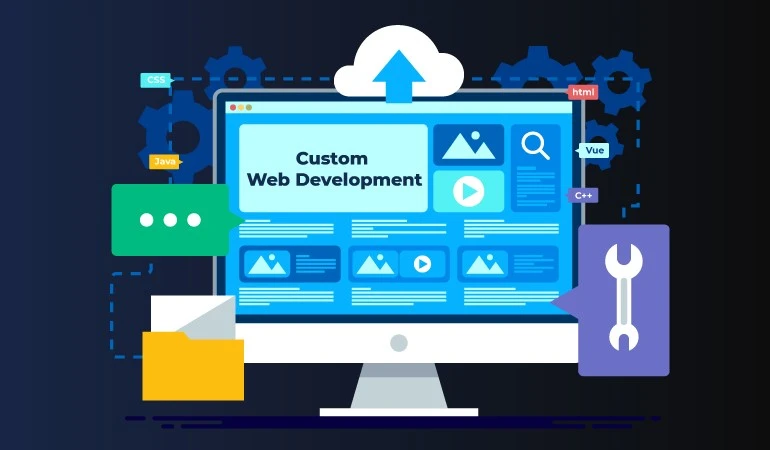
Custom web development involves creating a website entirely from scratch, without relying on pre-made templates or themes. This approach allows developers to craft a site that aligns precisely with your specific business objectives, target audience, and branding strategies. Unlike templated websites, which offer generic layouts and limited customization, custom websites are built with technologies such as HTML, CSS, JavaScript, and backend programming languages tailored to your needs.
Large enterprises often prefer custom web development because it enables them to deliver an exceptional user experience and establish a distinctive brand identity. Custom sites offer extensive flexibility, allowing features and functionalities to be integrated seamlessly, which is often challenging with off-the-shelf solutions. This level of customization is crucial for businesses seeking to innovate and differentiate themselves in crowded markets. For those interested in the technical side, exploring why JavaScript remains vital can provide deeper insights into the importance of programming languages in creating dynamic, responsive websites.
Difference between custom web development and website templates
While both custom web development and website templates serve the purpose of establishing an online presence, they differ significantly in approach and outcomes. Custom web development involves building every element of your website from the ground up, ensuring that each feature, design element, and functionality is tailored specifically to your business. This process typically employs advanced technologies like HTML, CSS, JavaScript, and server-side programming to craft a unique digital experience.
Conversely, website templates are pre-designed structures that can be quickly deployed to create a website. They come with ready-made layouts, themes, and components that can be customized to some extent but are generally limited in flexibility. Many businesses opt for custom development when they require a truly distinctive website that cannot be replicated with generic templates. For example, a bespoke website can be designed to reflect your brand’s personality and deliver a personalized user experience, which is increasingly vital for customer engagement.
The choice between these options often hinges on budget, timeline, and goals. Templated websites are suitable for those with tight deadlines and limited budgets, as they can be launched rapidly. However, for long-term growth, scalability, and branding, custom web development offers advantages that templates cannot match. Platforms like WordPress, Wix, Squarespace, Shopify, Joomla, and Drupal are popular off-the-shelf solutions, but they may restrict your site’s potential if not customized properly.
What is custom web application development?
While often confused, custom web development and custom web application development are distinct fields. Custom web development focuses on creating tailored websites that serve as your digital storefront or informational hub. These sites are designed to reflect your brand and facilitate user interaction.
On the other hand, custom web application development involves building complex software solutions accessible via web browsers. These applications provide specific services—such as customer portals, inventory management systems, or online booking platforms—that run on servers and are accessed over the internet. They often require intricate integrations with databases, APIs, and third-party tools.
Developing web applications is inherently more complex and costly than standard websites due to their functionality and scale. They typically involve more extensive planning, development time, and testing phases. For example, creating a custom e-commerce platform with advanced features like personalized recommendations or real-time inventory updates necessitates dedicated web app development expertise. To succeed in this domain, understanding platform restrictions and integration challenges is vital, especially when bridging gaps between different operating systems or devices.
7 Reasons Why You Should Choose Custom Web Development
Investing in custom web development offers numerous strategic benefits that can significantly impact your business trajectory. Here are seven compelling reasons to consider a bespoke solution:
1. Unique Brand Identity
A custom website allows your brand to stand out and communicate its core values effectively. Unlike templated sites, which are limited by pre-designed layouts, custom sites enable full branding control—colors, fonts, messaging, and interactive elements. This flexibility helps forge a memorable digital identity that resonates with your target audience. For instance, a tailored WordPress site developed through a reputable service can reflect your company’s ethos more authentically than a generic template.
2. User-friendly and Flexible
Custom websites are designed with user experience at the forefront. Skilled developers can optimize navigation, accessibility, and responsiveness, making your site intuitive and easy to use. Additionally, custom solutions are highly scalable; you can add or modify features as your business evolves without compromising performance. Unlike templated sites that rely heavily on plugins—which might introduce security vulnerabilities—custom development ensures a lean, efficient architecture. For further insights into web development best practices, you might explore mastering success as a web design agency owner.
3. Fast Loading
Page speed is crucial for retaining visitors and improving search engine rankings. Custom-built websites are optimized for performance because they are crafted with specific programming languages and architecture suited to your content. This native approach results in faster load times and a better responsive UI/UX experience, which is vital as users tend to abandon sites that take longer than three seconds to load.
4. Long-term Investment
While the initial cost of custom web development can be higher, it pays off over time. Custom websites are scalable, adaptable, and easier to maintain, providing a solid foundation for growth. They require fewer third-party plugins and work seamlessly with your evolving business needs, offering a better return on investment (ROI). This strategic approach aligns with the long-term vision of your enterprise.
5. Third-party Integration
Custom development facilitates smooth integration with third-party tools, platforms, and APIs. Whether you need to connect your CRM, payment gateways, or marketing automation tools, a tailored approach ensures compatibility and performance. This flexibility enhances operational efficiency and user experience, crucial for competitive markets.
6. SEO
Performance and speed significantly influence search engine rankings. Custom websites are inherently more optimized for SEO because they allow for clean code and tailored functionalities that meet the latest search engine algorithms. Implementing best SEO practices during development can improve your visibility, driving more organic traffic. Partnering with experienced SEO services further enhances your site’s search performance.
7. Excellent Security
Security remains a top concern for online businesses. Custom web development enables you to implement specific security measures, including SSL certificates, encryption protocols, and regular updates. Unlike templated sites, which are more vulnerable due to widespread use and known vulnerabilities, custom solutions can be fortified against cyber threats, safeguarding sensitive customer data and maintaining trust.
When is custom web development ideal?
Custom web development is most beneficial in scenarios such as:
-
Building highly complex or unique websites with specific functional requirements
-
Having a substantial budget to invest in tailored solutions
-
Seeking maximum personalization for user experience and branding
-
Innovating new digital products or services that off-the-shelf platforms cannot support
If your project involves significant customization or integration, engaging a professional web development agency can be a game-changer. For strategic insights into agency management, see mastering success as a web design agency owner.
When should you reconsider custom development?
While advantageous in many cases, custom web development might not be suitable for every situation. Consider these factors:
-
Budget constraints: Small businesses with limited resources may find templated solutions more feasible.
-
Time limitations: Off-the-shelf websites can be launched within weeks, whereas custom projects typically require 1–3 months or more.
-
Technical expertise: Building and maintaining a custom site requires ongoing developer support, which may not be practical for all organizations.
Choosing the right approach depends on your strategic priorities and available resources. A careful assessment ensures alignment with your business goals.
Typical project duration for custom web development
A custom web development project generally spans from one to six months, depending on complexity and scope. Smaller sites with straightforward features may be completed within 1–3 months, while large-scale enterprise solutions can take six months or longer. The process typically involves stages such as:
-
Ideation and planning
-
Wireframing and prototyping
-
Design and UI/UX development
-
Coding and backend integration
-
Testing and quality assurance
-
Deployment and post-launch support
Effective project management and clear communication are key to ensuring timely delivery.
Cost considerations for custom web solutions
The cost of custom web development varies widely based on complexity, features, and the development team’s rates. Generally, prices range from $5,000 to $20,000 for basic projects, while complex enterprise sites or e-commerce platforms can cost upwards of $70,000 to $300,000. Factors influencing costs include:
-
Number and intricacy of features
-
Design requirements
-
Duration of development
-
Choice between agency or freelance developers
Investing in a custom website is an investment in your brand’s future, offering long-term benefits that often outweigh initial expenses.
Why build a custom e-commerce website?
The growth of online shopping has transformed retail landscapes. A custom e-commerce website allows your business to deliver tailored shopping experiences, improve customer satisfaction, and integrate seamlessly with your existing systems. Unlike templated platforms like Shopify or WooCommerce, custom solutions enable you to craft a storefront optimized for your specific products, branding, and customer journey.
Creating a bespoke e-commerce site enhances conversion rates and reduces bounce rates by offering personalized features and better performance. Customization also allows for advanced integrations, such as personalized recommendations, complex inventory management, and third-party logistics, which off-the-shelf solutions may limit. For more strategic guidance, see mastering success as a web design agency owner.
Conclusion
In conclusion, investing in custom web development in 2025 is a strategic move for businesses aiming to differentiate themselves and achieve sustainable growth. Custom websites offer enhanced functionality, a distinct brand identity, superior user experience, and robust security—elements essential to thriving in a competitive digital landscape. While the initial investment may be higher, the long-term benefits—including scalability, flexibility, and better SEO—make it a wise choice for forward-thinking organizations.
Partnering with experienced developers ensures your website not only meets current standards but also adapts to future technological advancements. To explore how custom web development can support your business objectives, contact professionals who specialize in creating innovative, scalable digital solutions.